It’s almost impossible to plan a trip here without coming across the name Bangkok. But have you ever wondered if that’s what locals actually call it?

Do Thais call our capital “Bangkok”?
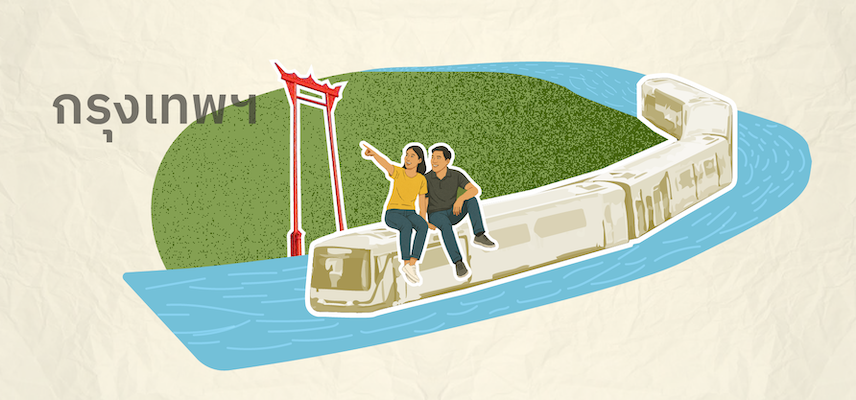
Bangkok is one of the most well-known and recognized capitals in the world. As the capital of Thailand—a medium-sized country in Southeast Asia famous for its tourism and culinary culture—it’s almost impossible to plan a trip here without coming across the name Bangkok. But have you ever wondered if that’s what locals actually call it?
That’s a great question. As someone born and raised in Thailand (though not originally from Bangkok), I grew up calling the capital Krung Thep—the Thai name taught in schools—while later learning to use the English term Bangkok.
So… what exactly does Krung Thep mean? And where did the word Bangkok come from?
In Thai, we usually write it as “กรุงเทพฯ” (Krung Thep). That special symbol “ฯ” is a shorthand that shows the name is being abbreviated. Thai people commonly refer to the city as just Krung Thep, and it’s by far the most used everyday name. But look closely at things like license plates or official documents, and you’ll notice a longer version: “กรุงเทพมหานคร” (Krung Thep Maha Nakhon)—a more formal four-syllable version used in administrative contexts. Sometimes you are likely to hear “กทม.” (Kor Tor Mor) as another alternative; this one is an initial abbreviation, often used on the address when sending parcels and letters.
Even so, Krung Thep Maha Nakhon still isn’t the city’s full name. The full ceremonial name of Bangkok holds a Guinness World Record for being the longest name of a capital city in the world.
Here it is: “Krung Thep Maha Nakhon Amon Rattanakosin Mahinthara Ayutthaya Mahadilok Phop Noppharat Ratchathani Burirom Udomratchaniwet Mahasathan Amon Piman Awatansathit Sakkathattiya Witsanukam Prasit”
Roughly translated, it means: “The city of angels, the great city of immortals, magnificent city of the nine gems, seat of the king, city of royal palaces, home of gods incarnate, built by Vishvakarman at Indra’s command.”
It’s a poetic name, with rhyming structures between sections. It was bestowed by King Rama I (Phra Buddha Yodfa Chulaloke the Great), who founded Bangkok as the capital of Siam Kingdom in 1782 CE (B.E. 2325).
Historical records and local oral traditions suggest that the name Bangkok came from the Thai word “บางกอก” (Bang Kok)—mainly referring to the area on the west bank of the Chao Phraya River opposite to the Grand Palace’s location. It was a riverside community located quite close to the delta and was an important trading area since the Ayutthaya period. (one of Thailand’s ancient capitals) There are two main theories about its origin:
- Bang Koh (บางเกาะ) — Bang means “riverbank area,” and Koh means “island”. At one point in history, canals were dug to connect area and shortcut parts of the Chao Phraya River, creating many island-like areas, so “Bang Koh” could’ve referred to geographic area back in time.
- Bang Makok (บางมะกอก) — named after Water Makok Trees (a local olive-like fruit usually grown in wetland) that used to believe grown there. Over time, the pronunciation may have morphed into Bangkok.
Today, Thai people typically use Bangkok only when talking in English or referencing something vintage, nostalgic, or “old-timey.” The name gained international use through foreign merchants and traders who adapted the local name to their own pronunciation—and that stuck.
Now you know: Krung Thep and Bangkok aren’t just translations of each other—they’re two very different names with unique histories. But well, much like Bangkok’s full name, you don’t really need to know it… unless you’re learning Thai or trying to impress someone.